
Foundations for Life by Lyn Stone Review
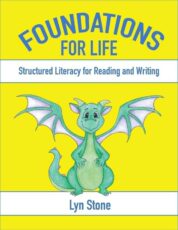
About Lyn Stone
Lyn Stone is an educational linguist, author and founder of Lifelong Literacy. Her journey began 21 years ago when she established a tutoring business to support children who were struggling to learn to read. In that time, she has seen plenty of literacy fads come and go.
Lyn brings an incredible depth of knowledge to this work, built through extensive training in linguistics, literacy and different approaches to teaching reading, alongside more than two decades of experience. What I particularly respect is that she has never stopped learning. She is open about how her knowledge and practice have developed as she has learnt more and the evidence has evolved.
What began with teaching children one-to-one grew into something much bigger: sharing that knowledge with the teachers, parents and schools who need it. Today, Lyn works alongside school leaders and teachers, providing professional learning, consultation and coaching to help put the evidence into practice.
Three books, a few second editions, and countless conferences and presentations later, Lyn continues to share that knowledge.
And I believe one of her best achievements may be Foundations for Life, because this time she has put that knowledge into the hands of some of the people who desperately need it: parents.
Overview
Foundations for Life has been written to give parents the knowledge and tools to better understand what their child is being taught in reading, spelling and writing and, importantly, how they can support that learning at home.
One of the things I really appreciated straight away was Lyn’s honesty about what this book is, who it is for and when to use it. There are so many literacy resources available now, and most parents simply don’t have the knowledge to know which one is right for their child or where they should even start.
And Lyn is very clear about something important: this is not a stand-alone literacy programme.
It isn’t designed to replace your child’s Structured Literacy lessons. It is there to work alongside them, while giving you, as a parent, a much better understanding of what your child is learning in reading, spelling and writing, why they are learning it and how you can help at home.
Is Your Child Ready to Start?
Lyn recommends that before starting, your child knows the majority of the 26 letters and their most common sounds and can recognise them confidently.
This matters because the book begins with CVC (consonant-vowel-consonant) words. To blend sounds together to read words, a child first needs to know enough of the sounds those letters represent.
Most parents I speak with have no idea exactly what their child knows or doesn’t know, and why would they?
 (better image coming soon)
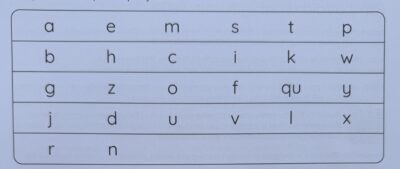
Lyn has included a very simple but functional sound and letter knowledge screener (assessment) to help you find out. It checks what letters and sounds your child knows and, importantly, comes with clear instructions about how to administer it, what to do and what not to do.
To put this into a practical example, if your child only knows 5 of the 26 sounds, I would focus on teaching more of those sounds before starting the book. If they know around 20 of the 26, you can probably get started and continue teaching the remaining sounds as you go.
But if your child is really struggling to learn and remember the sounds, stop and spend some time teaching them first. Without that foundational knowledge, asking a child to blend sounds together to read words is simply asking them to do something they don’t yet have the knowledge to do.
The screener isn’t about passing or failing. It is about finding out what your child knows, identifying the gaps and starting from the right place.
Read the Instructions: Yes, Really!
If you have ever heard Lyn speak, you will know exactly what I mean when I say that when you read this book, you can almost hear her saying the words. Her personality, humour and honesty come through on the page.
This especially made me smile when I got to “Read the instructions first.”
How many of us actually do that? We tend to jump straight in and do what we think we are meant to do. I know I am guilty of this. Just ask me how often I read the instructions before using a new appliance!
But with this book, you really do need to read them.
Lyn uses her own set of icons throughout the lessons, and you need to understand what they mean and what you are being asked to do. Otherwise, you could end up teaching the lesson incorrectly.
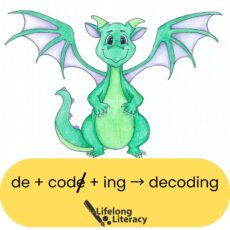
The instructions also introduce you to some fantastic Pro Tips, printable infographics to support error correction in reading and spelling and, if you haven’t met her yet, the Decoding Dragon.
So, unlike me with my appliance manuals, read the instructions first!
What the Book Covers
The book covers an extensive range of spelling patterns, along with morphology, including some common basic prefixes and suffixes. Some concepts become a little more complex, and Lyn has provided videos where she can explain these in more detail. I will come back to the videos later.
But this book goes well beyond spelling. What I particularly like is that Lyn is building the parent’s knowledge alongside the child’s. She explains things in a way that helps parents understand the language themselves, so they are better equipped to explain it, make connections and answer those inevitable “but why?” questions.
 (better image coming soon)
Keeping the Language Simple
Some of the language Lyn uses may be different or new to your child. Evidence-based Structured Literacy approaches can use different terminology and teach concepts in slightly different ways.
What I particularly like about Lyn’s approach is the way she brings phonology and morphology together. She helps the child understand how the sounds in a word connect with its spelling and meaning.
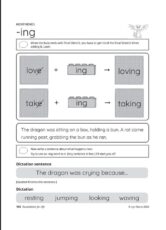
A great example is the suffix -ed. It can sound like /t/ in jumped, /d/ in played, or /ɪd/ in wanted, but no matter how it sounds, we spell it -ed. Lyn uses the meaning of the word to help make that connection. In these examples, -ed is showing us that the action happened in the past.
I really like this approach because it brings sound, spelling and meaning together. Rather than a child trying to remember three different sounds as separate rules, they are learning to recognise the meaningful -ed ending and use that knowledge when reading, spelling and understanding words.
What we don’t want from any evidence-based approach is for children to simply memorise long lists of rules. We want them to be explicitly taught the patterns and meaningful parts of words, learn to recognise those patterns in other words, and then use that knowledge to read, spell, build and comprehend words.
For parents especially, Lyn makes what can seem complicated much easier to understand and teach.
Building Knowledge and Then Building on It
Another strength of this book is the way learning builds and connects. Lyn doesn’t teach a spelling pattern, practise it once and then move on as though it is finished.
The book is cumulative. Previously taught sounds, spelling patterns and word knowledge keep appearing as new learning is introduced. Children use what they already know to build words, read words, spell words and make connections between them.
There are also purposeful review lessons built in. These give you a chance to check that your child is actually understanding and retaining what they are learning. If they aren’t quite there yet, you can simply go back, reteach it and practise again before moving on.
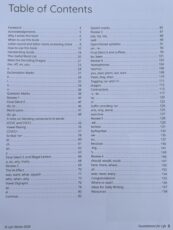
At the front of the book you will find what I would describe as the scope and sequence to follow. This is important because some stages deliberately refer back to previous learning. That earlier knowledge is then used to support the new learning rather than asking the child, or parent, to deal with too much new information at once.
This helps reduce cognitive overload or, in parent language, becoming overwhelmed!
You see this throughout the book, including in the fluency pyramids. New knowledge connects to existing knowledge, is practised and reviewed, and then becomes part of the foundation for what comes next.
Punctuation
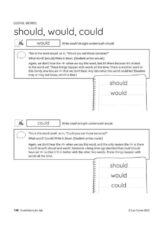
Punctuation is covered in what I think is a really clever but simple way for parents to understand it themselves and then explain it to their child.
You will find the obvious ones, such as full stops, question marks and exclamation marks, but Lyn goes further. She explains the purpose of punctuation. For example, she introduces commas without requiring a parent to first understand and explain all the different sentence types, and she explains why we use speech marks rather than simply telling a child where to put them.
And yes, Lyn even addresses the Oxford comma. Again, she has a very simple, common-sense explanation that made complete sense to me, but you will have to read the book for that one! I can’t give away all of Lyn’s tips in the review.
I think this is something Lyn does particularly well throughout the book: she gives children and parents the why. When children understand the purpose of what they are being taught, it is much easier for them to make sense of it and know when to use it.
Homophones: No Gimmicks Required
Another area Lyn covers is homophones, and you won’t find gimmicks for remembering them in this book.
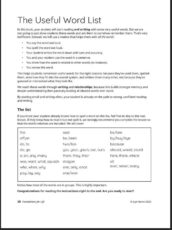
Instead, Lyn uses the language knowledge the child has already been taught, or is currently learning, to make connections between words. She draws on sounds, spelling patterns, word families and meaning to help children understand why words that sound the same can have different spellings and meanings.
Again, it comes back to building knowledge and making connections rather than memorising a trick.
Fluency Pyramids
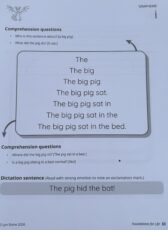
Lyn has included fluency pyramids throughout the book. A fluency pyramid gives a child repeated practice reading words in increasingly longer phrases or sentences. Because words are repeated as the pyramid builds, the child gets multiple opportunities to read them accurately and more automatically, helping build accuracy, automaticity and fluency without having to tackle completely new text each time.
I have seen fluency pyramids used in other resources before, but I particularly like how Lyn has structured hers.
Some fluency pyramids begin with part of a word, which could be interpreted as an open syllable, before building down to the complete word. This can become confusing when schools and tutors use different evidence-based approaches to teaching the alphabetic principle.
I was really pleased to see that Lyn starts with a complete CVC word. From there, each line adds another word or words, giving the child repeated practice while gradually increasing the amount of text they are reading.
I love this activity. You will find the pyramids throughout the book using the spelling patterns and words being taught at that point. They provide a simple way to practise accurate, increasingly automatic reading while reinforcing the phonics knowledge the child has already been taught.
 (better inage coming soon)
Comprehension: More Important Than It Might Look
I also love the comprehension questions Lyn has included.
At first glance, these might not seem like a particularly big deal, but I think they are an incredibly important part of the book.
We don’t just want a child to read or spell something once and move on. We want them to connect the dots, think about what they have learnt and be able to retrieve that knowledge again. Asking questions gives children opportunities to recall and use information, while also building oral language and comprehension.
And then there are the conversations those questions can start. Sometimes they take on a life of their own, which, as any good educator or tutor will tell you, can be dangerous! Haha.
But those conversations are also part of learning. They give children opportunities to explain their thinking, make connections and use language, rather than simply completing an activity and moving on.
Pro Tips and Notes
The Pro Tips and Notes are a stroke of genius.
I found myself reading something and thinking, “But what about…?” and there it was, almost every time, answered in a Pro Tip or Note.
For parents who are new to all of this, these are honestly gold. I can almost guarantee that at least 50% of the time your child will throw you a “but what if…?” that you weren’t expecting!
These little tips give you the extra explanation you need without filling the main lesson with so much information that it becomes overwhelming.
The Videos and QR Codes I Mentioned Earlier
Earlier I mentioned that some of the concepts become a little more complex, and this is where the free supporting videos and resources are really helpful.
There is a QR code in the book that takes you to videos where you get to watch Lyn actually teaching Elliot. I love this. There is something very different about seeing a concept taught to a real child rather than simply watching someone tell you how to teach it. You get to see the questions, responses and all those little moments that happen when you are actually working with a child.
You will also find QR codes on some of the lesson pages that take you straight to a resource relevant to what you are teaching at that point. I think this is a great addition. You don’t have to go searching for help when you need it because Lyn has connected it to the lesson for you.
I would also recommend exploring the resources section on Lyn’s website. There is so much more there to support your own learning, including free videos, webinars and resources, as well as Lyn’s podcast.
Using It Alongside Your Child’s Teaching
Like all resources, no two evidence-based Structured Literacy resources will look exactly the same.
If you have a good relationship with your child’s teacher or tutor, I think it is worth letting them know that you are using the book at home. Your child may occasionally say, “My teacher teaches this differently.” And that can be absolutely fine.
For example, one teacher may teach ay and ai together while another introduces them separately. These are relatively small differences within an evidence-based approach to teaching reading and spelling.
Lyn explains the reasons behind the approach she has taken in a really clear and easy-to-follow format, without overwhelming parents.
For me, this is an important part of the book. Parents aren’t simply being given activities to do with their child; they are being given the knowledge to understand what they are doing and why.
Don’t Forget the Books!
Lyn is also very clear that children need to be exposed to lots of books. Restricting a child only to the words and text they have been explicitly taught will hold them back. Children need authentic texts, rich language and different genres. They also need to be exposed to words and language to build the knowledge and vocabulary they need for reading and comprehension.
If your child can’t yet read these books independently, read to them or use audiobooks. Their current reading ability shouldn’t limit the vocabulary, knowledge, stories and ideas they are exposed to.
If you’re unsure what to choose, have a look at DEB’s BOOKS THAT BUILD LANGUAGE, KNOWLEDGE and VOCABULARY (By NZ School Year and Genre).
For children still in the early stages of learning to read, DEB’s What Are Decodable Books? explains what they are, why we use them and the different options available. Both links also explain in more detail why exposure to books, words and language is so important.
A Note About Moving Beyond Decodable Books
As children build enough knowledge of the alphabetic principle, they begin to use that knowledge to work out unfamiliar words for themselves. David Share’s self-teaching hypothesis helps explain how successfully decoding new words helps children learn and remember them.
There is no researched magic number for when this happens, but a practical recommendation is knowledge of the 26 letters and their common sounds, along with some common long-vowel patterns. This is why children eventually need opportunities to move beyond decodable text and apply what they know when reading authentic (real) books.
The goal of all of this is for children to become independent readers who can read and comprehend any text.
How I Would Use This Resource
My key points from working through the book so far would be:
- Start by finding the gaps. Don’t assume what your child knows.
- Read the instructions. They really do matter.
- Check foundational letter-sound knowledge. If there are significant gaps, address those first.
- Don’t aim for perfection before progressing, but make sure enough knowledge is secure for your child to move forward successfully.
- Make the connections explicit. Help your child see how sounds, spelling patterns, meaningful word parts and words connect.
- Use the comprehension and language opportunities, rather than treating this as simply a decoding exercise.
- Go back when needed. Don’t keep building on a foundation that isn’t secure.
- Keep your child’s teacher or tutor in the loop where possible so the learning at home complements what is happening in their lessons.
Summary
As a parent myself, I didn’t start this journey because I wanted to. I started it because my child needed help, and I needed to understand what was going on and how I could help him.
At the beginning of the book, Lyn shares the story of Elliot and his mum, Kaeleen. Reading their story took me straight back to those early years with my own child. I even found myself going back and watching a video from Year 2, remembering just how much I didn’t know then compared with what I know now.
And that is really why I have chosen to write such an in-depth review of this book.
Elliot and Kaeleen’s story is not unique. Lyn has spoken to and worked with many parents over the past 20-odd years who have found themselves in exactly this position: their child is struggling and they desperately want to help, but they don’t have the knowledge to know where to start.
Foundations for Life acknowledges those challenges and, importantly, provides some solutions and options. It gives parents knowledge, practical tools and a much clearer understanding of what their child is learning and how they can support that learning at home.
For me, that is the real value of this book. It meets parents where many of us have found ourselves: knowing our child needs help, but not necessarily knowing what to do next.
I am very happy to say that I recommend Foundations for Life for parents, and I can also see it being a really useful resource for teacher aides who are just starting out and building their knowledge of evidence-based literacy instruction.
At around NZ$65 (based on the exchange rate on 22 August 2026), I think this book is excellent value for money, particularly when you consider how much is packed into it, along with all the free supporting videos and resources available to help you along the way.
You can purchase the book through Silvereye in Australia. I use Silvereye all the time and have always found their postage to New Zealand really reasonable too.
And perhaps that is why I believe Foundations for Life is one of Lyn’s most important achievements. She has taken knowledge she has built over more than two decades and put it into the hands of the people who so often desperately need it: parents.
Full Disclosure: My Connection to Lyn Stone
I want to finish with full transparency about my connection to Lyn Stone.
Lyn is someone I consider a friend in the literacy world. Over the years, we have connected and communicated both privately and publicly online, and have also had the pleasure of meeting in person. I was probably drawn to Lyn initially because, like me, she is from Scotland, but what I have always valued most about her is her honesty.
Honesty can sometimes be a rare thing in the literacy world, particularly when part of your business involves promoting yourself, your training or your resources. It can be tempting to shy away from saying things that might rock the boat.
Lyn has never struck me as someone who does that. I have always seen her approach as “it’s about the kids and what they need first”, and that is something I genuinely admire about her.
Lyn kindly gifted me a copy of Foundations for Life to review, allowing me to take the time to work through it and write this review specifically for parents. I have used my own knowledge, training and experience to judge the book, including whether what is being taught aligns with the evidence and an evidence-based approach to reading, spelling and writing, such as Structured Literacy.
My goal with every review is, and always will be, to be honest and recommend what I genuinely believe will benefit our kids. Knowing Lyn personally doesn’t change that, but I think it is important that you know both about our connection and that the book was gifted to me.
This review was by Sharon Scurr Founder of Dyslexia Evidence Based on the 22 August 2026