
Junior Learning Decodable Chapter Books Review
Overview
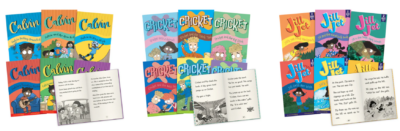
This review looks at the Junior Learning decodable chapter books and whether they are suitable for older learners, home support, and intervention.
Authors
The Junior Learning decodable books have been developed by Dr Duncan Milne and Anna Kirchberg.
Anna Kirchberg is a children’s author who has long been involved in writing decodable books. She is the original author of the first Phonic Plus books, developed to support structured phonics instruction, and has continued to create a wide range of decodable readers over the years.
Dr Duncan Milne is a New Zealand educational neuroscientist and cognitive scientist with a strong understanding of how children learn to read, particularly in relation to phonics and structured literacy.
From my own experience, both Duncan and Anna are very friendly, approachable, and supportive, and are always willing to share their knowledge and answer questions. This makes a real difference when supporting children and understanding how to use resources effectively.
Together, they have created resources that combine research-informed understanding with practical application, supporting parents, educators, and intervention settings.
What This Resource Includes
- Longer-form decodable chapter books
- More mature layout and design compared to early readers
- Text aligned to a systematic phonics progression (Letters and Sounds)
- Includes carefully controlled text and decodable sentence structures
- Designed to support continued decoding development beyond early decodable readers
- Text difficulty increases gradually across the series, supporting progression and confidence
- Designed to bridge the gap between early decodable readers and more complex texts
- Content can support spelling and writing connections, reinforcing taught phonics patterns
- Uses a larger font size, well-spaced layout, and illustrations, helping to reduce visual overwhelm, break up longer sections of text, and support engagement and confidence for learners who may find dense text challenging
- Books are typically provided in sets, with each phase including approximately 12 books, depending on the series
Who It May Suit
These books may be suitable for:
- Students who need to continue developing reading skills beyond early decodable texts
- Children typically around ages 7–10, who are moving beyond early readers and building fluency and confidence
- Students who are still learning to read and need access to age-respectful reading material
- Students working within structured literacy or intervention support
- Parents supporting reading at home
- Educators and teacher aides looking for decodable texts suitable for older learners
Strengths
Supports continued reading development for children aged 7–10, and older learners where the learner’s profile is an important consideration
These books provide an important step beyond early decodable readers, allowing students to continue practising decoding skills in a more age-appropriate format.
Supports fluency and automaticity
The longer text format supports repeated reading of connected text, helping students build fluency and automaticity. As reading becomes more automatic, students are able to focus more on understanding what they are reading.
Age-respectful and discreet
These books do not look like typical beginner readers. Students can read them without it being obvious they are decodable, which helps support confidence and engagement.
Follows a structured phonics progression through to Phase 6
These books follow a Letters and Sounds phonics progression, starting with basic sounds and moving through the phases, building towards more advanced concepts such as suffixes and word endings (Phase 6). This supports learners as they consolidate earlier skills and develop a deeper understanding of how words work.
These books can work well in intervention settings when carefully matched to the learner’s age, stage, and overall learning profile.
Things to Consider
- These books are not a teaching programme and should be used alongside explicit instruction
- Careful matching to the learner’s level is important
- Students need to have been taught the phonics patterns before reading independently
- These books are primarily designed for younger learners, rather than intervention, although they can and should be used in intervention for the right learner
- These books may not be suitable for some learners in the upper primary years or secondary school, depending on their needs and preferences
- It is important to always consider the learner’s profile, including age, confidence, reading level, and individual learning needs
How to Use
- Use these books after the relevant phonics patterns have been explicitly taught
- Select books that match the learner’s current level of decoding ability
- Use them to support reading fluency and automaticity
- Read texts to build confidence, accuracy, and comprehension
- Use words and sentences from the text to support spelling and writing practice
These books work best when used as part of a structured literacy approach, where reading, spelling, and writing are explicitly taught and connected.
Summary
The Junior Learning decodable chapter books are a valuable option for learners who still require decoding support but need reading material that feels more appropriate for their age.
I am happy to recommend these as part of a structured literacy approach, particularly for students who need continued support with decoding while building confidence and fluency.
You can purchase the books at
Junior Learning https://juniorlearning.co.nz/search?q=Chapter+books&type=product
Learning Matters https://shop.learningmatters.co.nz/search?type=chapterbooks&options%5Bprefix%5D=last&q=chapter+books
Disclosure
I was gifted a selection of these books by Anna Kirchberg at the Learning Matters Conference to take home and review.
This allowed me to look through them in more detail and consider how they may be used in real situations. This review reflects my honest experience and professional judgement, and I was under no obligation to provide a positive review.
Original review shared on Facebook with more photos : 21 November 2025
Transferred to website: 15 April 2026
This review was written by Sharon Scurr founder of Dyslexia Evidence-Based (DEB).