
SUNSHINE BOOKS READING ADVENTURES DECODABLE GRAPHIC NOVELS REVIEW
Overview
I was asked to review the new graphic novel books released for the Reading Adventures series by Sunshine Books.
These books are designed for older students who are still learning the code, using a graphic novel format to engage learners in a less conventional way. Graphic novels can help reduce the overwhelm some students feel when faced with large amounts of text, while still supporting engagement with story and reading.
The books also fit neatly within the Sunshine scope and sequence, allowing schools to build a larger collection of decodable readers within their structured literacy approach.
What This Resource Includes
Books Reviewed
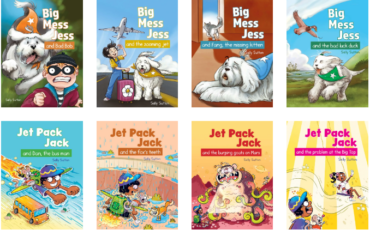
I was sent the first 8 books in the series:
- 2 books from Sets 1–3 (Simple Code)
- 2 books from Set 4 (Complex Code)
- 2 books from Set 5 (next stage of the Complex Code)
- 2 books from Sets 6–7 (next stage again)
Built-In Teaching Supports
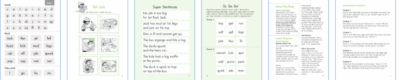
The books include a range of built-in teaching and support materials designed to extend learning beyond simply reading the story, including:
- phonics warm-up sounds and tricky words
- vocabulary lists with child-friendly meanings
- comprehension questions
- discussion prompts
- fluency suggestions and activities
- decodable sentences
- Silly Sentences
- retell story pictures
- games, including Tic Tac Toe
Downloadable Resources
There are also downloadable resources available, including:
- tricky word lists for each book
- word searches
- bookmarks
About the Author
I was intrigued by the author of these books. Sally Sutton is a New Zealand children’s author, and anyone who has ever written decodable text will tell you it is not as easy as people think. You are limited to words and spelling patterns that fit within each stage of the scope and sequence.
It was refreshing to watch an interview Sunshine Books did with Sally and hear how she developed the stories and characters. Sally also worked alongside the Sunshine team to ensure the phonics content and progression aligned correctly within the scope and sequence.
I appreciated her honesty around how challenging writing decodable books can be as an author because of the limitations placed around the code. However, she also made it very clear that she refused to compromise on story. The books still had to be fun and engaging, and for Sally, that meant humour.
She definitely brings humour to the stories. Even if you, as the adult reading them, do not always think they are funny, I have it on very good authority from Ben that they are hilarious.
Jetpack Jack and Big Jess Series
The first series Ben and I read was Jetpack Jack, and at first glance, I liked them. There is a thickness to the books that makes them feel like “real books”, and each book contains 6 chapters. For children who struggle with reading, this can help them feel like everyone else reading chapter books.
We also read the Big Jess series, which continued the same graphic novel style and structured progression through the code while introducing different characters and storylines. In the Big Jess series, Jess is a dog who loves eating buns and constantly lands herself in trouble, but somehow still manages to become the hero by the end of the story, much like Jetpack Jack.
If I am honest, you can tell an author wrote these because of the detail that has gone into the characters, storylines, and how the characters are portrayed. Even in Book 1, there is already a storyline developing.
Both series are filled with challenges, emotions, humour, chaos, problem-solving opportunities, and facing your fears throughout the stories. In Jetpack Jack, Rex the rat acts as Jack’s loyal sidekick and cheerleader, while in Big Jess, Jess has her own sidekick, Pip. The characters regularly find themselves in messy, funny, and sometimes challenging situations that children will likely relate to, while also heading off on adventures to places such as the airport, the vet, the circus, and even a trip to Mars.
I could see these books creating fantastic opportunities for oral language, inference, and discussion, allowing adults to pause and talk about emotions, friendships, problem-solving, perspectives, social situations, and how the characters handled different challenges throughout the stories.
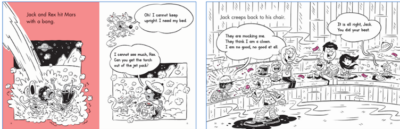
The illustrations reminded me of old-style printed storybooks, with black-and-white pages and small pops of colour. Instantly, I knew these would be a hit. While graphic novels can sometimes be visually overwhelming for some learners, particularly autistic children, I felt the balance of black, white, and one main colour throughout each book worked really well.
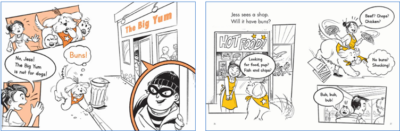
The illustrations continue throughout the books and help build the story through the characters’ actions, reactions, and expressions. They do not give away the words, but instead add meaning, emotion, humour, and support to the storyline as it develops. Rathe r than simply telling the reader everything directly, the books encourage children to think about what the characters may be feeling, why they acted a certain way, and what the author is trying to communicate through both the story and illustrations.
I also liked that Sunshine Books introduced some two-syllable words that still follow the phonics patterns taught, beginning right from Book 1. This helps expose students to longer words in a manageable way while still keeping within the code they have already been taught.
As a parent whose child has a language disorder, I particularly appreciated the book Jetpack Jack and the Fox’s Teeth, as it included vocabulary relating to size and comparison concepts, which can sometimes be difficult for children with language difficulties to fully understand. Concepts such as long, longer, longish, and longest can be challenging, and the book naturally incorporates words such as big, thin, long, and fat, creating opportunities to extend vocabulary and oral language discussions while reading.
The books have not only been well written, but there has clearly been thought put into how to support both teachers and parents when using them.
At the back of the books, you will find sounds and words that align with both the book and the Sunshine Books scope and sequence. This is recommended to be used as a phonics warm-up at the beginning of the lesson, helping build in review while also checking whether the child knows the sounds and tricky words listed before starting the story.
The teaching supports included at the back of the books help extend learning well beyond simply reading the story and include vocabulary activities, discussion prompts, writing and fluency ideas, games, comprehension questions, decodable sentences, and quiz questions.
They also provide downloadable resources, including tricky word lists for each book, word searches, and bookmarks to further support reading practice and engagement.
How to Use These Books
- Once you have explicitly taught the relevant phonics patterns, select books that match the child’s current level of knowledge and decoding ability.
- Do not rush through the books. Allow students time to build confidence, accuracy, fluency, and understanding before moving to the next level of the scope and sequence.
- Pre-teach key vocabulary before reading to support understanding and reduce cognitive load. Vocabulary words with child-friendly meanings can be found at the back of the books.
- Take time to pause and discuss the story while reading to support vocabulary, oral language, inference, and comprehension.
- After each chapter, use the comprehension questions at the back of the book to check understanding and revisit any sections the student found difficult.
- Use the retell story pictures to help students sequence the beginning, middle, and end of the story, as well as identify the problem and solution.
- Re-read texts to support confidence, accuracy, fluency, and comprehension. The books also include suggestions for modelled reading, choral reading, repeated reading, and partner reading.
- Silly Sentences, quiz questions, and decodable sentences can be used to extend reading practice, spelling activities, dictation, sentence building, and writing connected to the phonics patterns being taught.
- You will find some onomatopoeia words throughout the books, including a few pseudo words such as chong. These can be used diagnostically while listening to the child read. If a child struggles to decode ng in a word such as chong, revisit the sound pattern through words such as song, long, ping, or dang. Likewise, difficulties with ch in words such as chop, or chip may indicate the sound pattern needs further review and practice. This also creates a fun opportunity to introduce onomatopoeia words and explore sound words together.
- Finish the lesson with a fun element by playing the Tic Tac Toe game included at the end of the book.
- These books work best when used as part of a structured literacy approach, where reading, spelling, and writing are explicitly taught and connected.
Things to Consider
- These books are not a teaching programme and should be used alongside explicit instruction as part of a structured literacy approach.
- Graphic novels do not suit all children, so it is important to consider the child’s learning profile, needs, and current skill level before introducing them.
- Some students may find it harder to track text across different parts of the page. If needed, allow the child to finger point or track the text while reading to help support visual tracking and sentence flow.
- Some students may initially focus heavily on the illustrations rather than the text. They may need support learning how to navigate speech bubbles, sequencing, and balancing attention between the illustrations and reading the words.
- While I agree these books are designed for older students, I personally feel they may be most appropriate up to around age 12 for many learners, unless the student is older and has additional learning or language delays. As always, consider the individual profile, interests, and needs of the child rather than focusing only on age.
Summary
I really loved these books. The books are hilarious, and the characters are genuinely funny. Even though Ben could read the first three books easily, he was still fully engaged with each page. He was laughing out loud and constantly pointing out details within the illustrations and storyline.
The books provide rich opportunities for oral language, discussion, inference, vocabulary, and comprehension alongside decoding practice.
The length of the books helps build a child’s reading stamina while still protecting against cognitive overload, which we know is such an important part of learning. I also really appreciated the thought that went into all the teaching recommendations, activities, and extra sentences included throughout the resources. It removes a lot of preparation time for teachers while also supporting parents who are trying to help their child at home.
These books would align well with any structured literacy approach, and I would have no hesitation recommending them for parents to purchase or for schools to invest in as part of their literacy and learning support resources.
Disclaimer
Sunshine Books paid me for this review. However, I want to be transparent that payment does not influence or change my opinions about a resource.
As a parent, maintaining trust and integrity around the resources I recommend is extremely important to me. I will only review resources that I believe are research-informed, align with structured literacy principles and the values DEB advocates for, and that I genuinely feel could benefit DEB members, educators, and families supporting children with literacy difficulties.
More photos of the book can be found on the DEB Facebook page Link –
Link to purchase the books https://www.sunshine.co.nz/reading-adventures-overview/
Link to Video about the Author https://www.sunshine.co.nz/sally-sutton/?srsltid=AfmBOooruQoHinjIqEPmYuMzsN5GzcId6tkCVhdGrGzUKOMdQYh7AJQo
Review written by Sharon Scurr Founder of the Dyslexia Evidence Based 24 May 2026