
Innerlinks Decodable Books Review
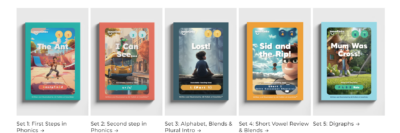
I would like to thank Ali Fullick for gifting these books for review. Reviewing resources remains an important part of what I do, as it allows me to carefully consider whether something is practical, aligned, and genuinely useful for the DEB community.
About the Author
Ali Fullick is a trained SPELD teacher who has worked with many students with dyslexia. Like many in this space, her journey began with her own child needing support.
She has since completed formal training and also travelled to Australia to undertake UFLI Foundations training with Holly Lane. This training focuses on understanding not just what to teach, but how to teach it correctly and why each step in the sequence matters.
Her experience as both a parent and educator is clearly reflected in the way these books have been designed.
First Impressions
These books are visually appealing, well-structured, and clearly designed with both the learner and the adult in mind.
The illustrations are warm and engaging, with characters that feel approachable, something that really matters for learners who may already feel unsure about reading.
Like all decodable texts, there are natural constraints. The author must work within the alphabetic patterns that have been explicitly taught. This means vocabulary and storyline are controlled—but this is also what makes decodable books effective.
One feature I particularly appreciated is the clear guidance at the beginning of each book. Irregular words and decodable words are listed, making it easy to identify what support may be needed before reading. This supports more intentional and prepared teaching.
Understanding the Role of Decodable Books
Decodable books serve a very specific purpose.
They are designed to provide practice and consolidation of the alphabetic code that has already been explicitly taught. Their role is to support:
- accuracy
- fluency
- confidence
They are not designed for rich vocabulary or complex storytelling. That is the role of read-alouds and other rich language experiences.
When used as intended, alongside explicit and systematic teaching, decodable texts are a powerful tool.
Alignment with UFLI Foundations
These books follow the scope and sequence of UFLI Foundations, developed by Holly Lane.
This is a key strength, particularly for those already using UFLI, as it maintains consistency in how sounds, patterns, and irregular words are introduced.
The books have been reviewed by Holly Lane’s team and recognised as genuinely aligned decodable texts. This is important, as many resources claim alignment but do not accurately follow the sequence.
They have also been adapted for New Zealand English, which is important when considering spelling and language differences.
If you are using a different scope and sequence, you may notice some patterns or irregular words appear earlier or later than expected.
Who These Books Are Likely to Suit
These books are likely to suit:
- learners needing structured, controlled practice after explicit teaching
- intervention settings where accuracy and fluency are the focus
- parents supporting reading at home alongside a structured approach
- early readers building foundational skills
They may work up to around age 10 (and older for some learners), depending on the individual child’s needs, confidence, and how they respond to the look and feel of the books.
Considerations
- These books follow the UFLI sequence, so they may not align with all programmes
- As with all decodable texts, content is controlled and not designed for rich storytelling
- Suitability for older learners will depend on how they feel about the design and presentation
Availability
These books are independently published and are being released in stages.
At the time of writing:
- Sets 1–4 (covering the basic code)
- Set 5 (digraphs)
- The rest of the series is being developed over time
They are reasonably priced for the quality and are durable enough for reuse across multiple learners.
Final Thoughts
The Innerlinks Decodable Books are a well-considered resource that aligns with evidence-based structured literacy practices.
Their strengths include:
- clear alignment to a defined scope and sequence
- thoughtful design for teaching and practice
- accessibility for both parents and educators
As always, these are most effective when used alongside explicit teaching—not as a standalone solution. When used well, they can support the development of accuracy, fluency, and confidence in early reading.
Learn More
Created By Sharon Scurr Founder of DEB , original review on Facebook was 13 February 2026 with photos
Transferred to the website on 15 April 2026