
Let’s Talk Spelling: Child-led vs Teacher-led
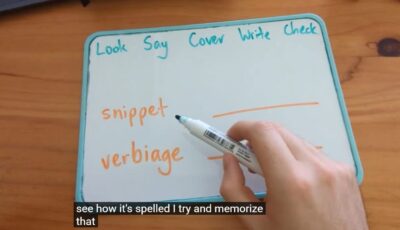
Before Structured Literacy was mandated in New Zealand schools, spelling was often a real pick-and-mix approach. The most common method used within a child-led, balanced literacy approach was Look, Say, Cover, Write.
Children were given a weekly list of words, with many schools using the Essential Word Lists. These words were not grouped by spelling patterns or taught in a logical sequence. Instead, they were generally high-frequency words commonly found in PM Readers or Ready to Read books.
At the beginning of each week, the word list was sent home, and parents were expected to help their child learn the words. On Friday, the children sat a spelling test. If they got all the words correct, they moved on to the next list. If they made mistakes, those words were simply added to the following week’s list.
For many children, particularly those with dyslexia or other literacy difficulties, these weekly spelling tests became the source of real anxiety. They often worked incredibly hard but still struggled to remember words that had never been explicitly taught. Friday became a reminder of what they couldn’t do rather than an opportunity to celebrate what they had learned.
Even children who achieved 10 out of 10 were rarely asked to spell those words again. The assumption was that once a word had been spelt correctly in a Friday test, it had been learned permanently. We now know that this simply isn’t how memory works. Without retrieval practice and spaced review, many children forget what they have learned over time.
The problem wasn’t that children weren’t trying hard enough. The problem was that the approach relied heavily on memorisation rather than teaching children why words are spelt the way they are.
Now, that has changed, and we need to protect this change
Instead of asking children to memorise lists of unrelated words, we are finally teaching spelling. We are teaching children how words work by teaching the alphabetic code. Children learn how words are made up, from spelling patterns through to morphology patterns, helping them understand both how words are spelt and why they are spelt that way.
We don’t ask parents to “teach spelling” at night anymore. The teacher is at the front of the class, teaching, explaining the new learning, checking for understanding, and putting supports and scaffolds in place for the children who need more.
We also don’t teach something once and move on. Review is built into every lesson. Previously taught spelling patterns and concepts are continually revisited, giving children repeated opportunities to retrieve and strengthen their learning so it becomes automatic over time.
We follow a logical scope and sequence based on the progression of the alphabetic code. Each new concept builds on what has already been taught, giving children the knowledge and confidence to spell not just this week’s words, but thousands of words they haven’t seen before.
I know I can write about this, and often it can feel like a very abstract concept. If you haven’t seen a lesson. As the saying goes, seeing is believing.
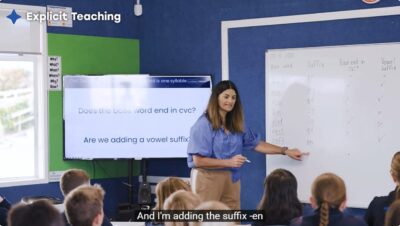
That’s why I’m so excited to share the new Liz Kane Literacy video featuring Kirsty Tatere teaching a Year 4/5 spelling lesson.
The full lesson runs for 26 minutes and 40 seconds, and it provides a fantastic example of what explicit spelling instruction looks like in practice. Kirsty begins by reviewing previously taught learning before introducing the CVC doubling rule. Throughout the lesson, she moves around the classroom, checking for understanding, providing immediate feedback, and discreetly supporting the children who need extra help.
What I love most is how engaged everyone is. Kirsty is enthusiastic, the students are actively involved, and there are countless opportunities for children to think, respond, discuss, and write. We know that this kind of active practice strengthens learning and helps move new knowledge into long-term memory.
If you’ve ever wondered what the spelling component of a Structured Literacy approach actually looks like in a classroom, this lesson is well worth watching. It shows that spelling is no longer about memorising a list of words for Friday’s test. It’s about explicitly teaching children how our writing system works, giving them the knowledge, practice, review, and support they need to become confident, independent spellers.
You can also watch Adrienne teaching a Year 2 lesson, and I believe there is a Year 7/8 lesson coming soon. Check out the Liz Kane Literacy YouTube channel if you’re interested in seeing the spelling component of a Structured Literacy approach across different year levels.
I also found a YouTube video of a teacher demonstrating the Look, Say, Cover, Write, Check method. There were many examples to choose from, but it just so happened this one used the word “snippet.” What struck me was that snippet can be explicitly taught using the CVC doubling rule, rather than asking a child to memorise it. That one word perfectly illustrates the difference between the two approaches.
As a parent, you have to ask yourself this: Do you want your child trying to figure out how to spell words by memorising them, or do you want a teacher like Kirsty explicitly teaching your child how words work?
For me, the answer is simple.
This is also another reason why we need to continue with a Structured Literacy approach and why protecting the mandate is so important. The mandate doesn’t just protect what children are taught; it protects how they are taught by ensuring every child has access to explicit, systematic and cumulative instruction rather than a pick-and-mix approach that varies from classroom to classroom.
We still have work to do to ensure greater consistency, quality and accountability in Structured Literacy professional learning and development, but those are things we can improve. We need continued investment in high-quality PLD, coaching, resources and ongoing support so teachers can confidently deliver a Structured Literacy approach. If we genuinely want better outcomes for all children, especially those who struggle the most, we must protect the progress we’ve made by keeping the mandate and continuing to invest in a Structured Literacy approach that gives every child the best opportunity to become a successful reader, writer and speller.
Liz Kane Literacy YouTube Channel
Look, Say, Cover, Write YouTube video
Written by Sharon Scurr 25 July 2026