
Junior Learning Real World Non-Fiction Hi-Lo Books Review
Overview
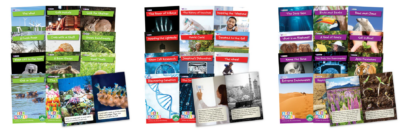
This review looks at the Junior Learning Real World Non-Fiction Hi-Lo books and whether they are suitable for home support, classroom use, and intervention, particularly for older students who are still learning to read.
What Hi-Lo Means
Hi-Lo stands for high interest, low reading level.
These books are designed to provide age-appropriate, engaging content (high interest) while keeping the reading level accessible (low reading level). This is particularly important for older students who are still learning to read, as it allows them to access meaningful content without feeling like they are reading books designed for much younger children.
Authors
The Junior Learning decodable books have been developed by Dr Duncan Milne and Anna Kirchberg.
Anna Kirchberg is a children’s author who has long been involved in writing decodable books. She is the original author of the first Phonic Plus books, developed to support structured phonics instruction, and has continued to create a wide range of decodable readers over the years, including science-based texts and chapter books.
Dr Duncan Milne is a New Zealand educational neuroscientist and cognitive scientist with a strong understanding of how children learn to read, particularly in relation to phonics and structured literacy.
From my own experience, both Duncan and Anna are very friendly, approachable, and supportive, and are always willing to share their knowledge and answer questions. This makes a real difference when supporting children and understanding how to use resources effectively.
Together, they have created resources that combine research-informed understanding with practical application, supporting parents, educators, and intervention settings.
What This Resource Includes
- Non-fiction decodable books focused on real-world topics and people, including inventions, discoveries, and key figures
- Titles include:
- The Power of X-Rays
- Inventing the Lightbulb
- Inventing the Telephone
- Discovering Genetics
- Marie Curie
- Content designed to build background knowledge and vocabulary
- Text aligned to a systematic phonics progression (Letters and Sounds)
- Includes later phase phonics content, such as Phase 6 suffixes (e.g. -s, -es, -ing, -ed)
- Books are typically provided in sets, with each phase including approximately 12 books, depending on the series
Who It May Suit
These books may be suitable for:
- Students who need to build reading skills alongside knowledge and vocabulary
- Older students who are still learning to read, and need access to age-respectful, knowledge-rich content while continuing to develop decoding skills
- Children working within a decodable framework who benefit from non-fiction content
- Students who may have had reduced reading exposure, impacting vocabulary and background knowledge
- Parents supporting reading at home
- Educators and teacher aides looking for structured, knowledge-rich decodable texts
Strengths
Builds knowledge and vocabulary while learning to read
These books give students access to real-world topics such as scientific discoveries, inventions, and important figures. This supports the development of background knowledge and vocabulary, which are essential for reading comprehension.
This is particularly important for older students who are still learning to read. Many of these learners have had reduced exposure to reading over time, meaning they may also have gaps in vocabulary and general knowledge.
Supports students with reduced language and reading exposure (including DLD)
Students who read less often have fewer opportunities to build vocabulary and knowledge. This is often referred to as the Matthew Effect — where reduced reading leads to reduced exposure, which can impact comprehension over time.
This is especially relevant for students with Developmental Language Disorder, who may need additional support to build vocabulary and language understanding.
These books help address this by providing meaningful, knowledge-rich content within a decodable framework, supporting both reading development and language growth.
Supports fluency and automaticity
These books provide opportunities for repeated reading of connected text, helping students build fluency and automaticity. As decoding becomes more automatic, students can focus more on understanding what they are reading, rather than working out each word.
Builds on phonics progression through to Phase 6
These books follow a Letters and Sounds phonics progression, starting with basic sounds and moving through the phases, building towards more advanced concepts such as suffixes and word endings (Phase 6). This supports learners as they consolidate earlier skills and develop a deeper understanding of how words work.
Things to Consider
- These books are not a teaching programme and should be used alongside explicit instruction
- Careful matching to the learner’s level is important
- Some books include more advanced phonics content (such as suffixes), so these are best used once those patterns have been taught
How to Use
- Use these books after the relevant phonics patterns have been explicitly taught, as they follow a Letters and Sounds progression
- Select books that match the child’s current level of knowledge and decoding ability
- Use them to support reading fluency and automaticity, not just initial decoding
- Pre-teach key vocabulary before reading the book to support understanding and reduce cognitive load
- Take time to discuss the content, helping to build vocabulary and understanding
- Re-read texts to support confidence, accuracy, and comprehension
- Words and sentences from the books can also be used to support spelling practice and writing decodable sentences, reinforcing the same phonics patterns
These books work best when used as part of a structured literacy approach, where reading, spelling, and writing are explicitly taught and connected.
Summary
The Junior Learning Real World Non-Fiction Hi-Lo books are a strong option for supporting both reading development and knowledge building.
They provide an important balance, supporting decoding while also building the knowledge and vocabulary many struggling readers may have missed over time.
I am happy to recommend these as part of a structured literacy approach, particularly for students who need continued support with decoding while also building knowledge and understanding.
You can purchase the books at Junior Learning here
Disclosure
I was given a selection of these books by Anna Kirchberg at the Learning Matters Conference to take home and review.
This allowed me to look through them in more detail and consider how they may be used in real situations. This review reflects my honest experience and professional judgement, and I was under no obligation to provide a positive review.
Original review shared on Facebook with photos: 23 September 2025
Transferred to website: 15 April 2026
The review was written by Sharon Scurr founder of Dyslexia Evidence-Based (DEB).