
School Reports: Understanding What They Tell You — and What They Don’t
Updated to reflect the new curriculum phase descriptors and reporting changes in New Zealand schools.
This document has been written to help parents, teachers, and educators better understand what school reports may, and may not, show about a child’s learning profile. Broad achievement labels can sometimes hide important gaps in foundational skills, levels of support, cognitive load, and the amount of effort required for a child to cope successfully. The goal is to help parents better understand why their child may be struggling and support them to work alongside schools to identify appropriate supports, scaffolds, intervention, and next steps.
Broad labels, descriptors, and assessment scores can sometimes make it difficult for parents to understand:
- which specific skills have been assessed,
- which skills are secure or still developing,
- what support may still be needed,
- and what may sit underneath a broad descriptor.
Two students can receive the same descriptor or achievement level while having very different learning profiles, levels of independence, cognitive load, and support needs.
A child may appear to be:
- Emerging
- Developing
- Consolidating
- Proficient
- or Exceeding
while still requiring:
- significant support,
- prompting,
- repetition,
- scaffolding,
- review,
- accommodations,
- or experiencing high levels of cognitive overload behind the scenes.
This is especially important for children with dyslexia, ADHD, DLD, working memory difficulties, and other learning challenges, where the real difficulties often sit underneath broad labels or achievement descriptors.
For many parents, school reports can appear clear on the surface while still leaving important questions unanswered about how a child is learning, what remains difficult, and what support may still be needed.
Below is an example image of the new reporting descriptors taken from the Ministry of Education Parent Portal. The Parent Portal also provides further information to help families better understand the new curriculum phases, reporting language, and what these descriptors may look like in practice.
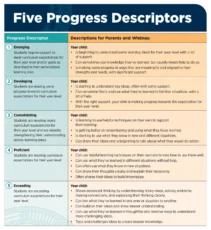
Link to Ministry of Education Parent Portal
What Reports Don’t Tell You
Most school reports still do not clearly show:
- Which specific skills were assessed
- Which skills are secure/mastered, and which are still developing and need review
- What sits underneath broad labels such as reading, spelling, grammar, vocabulary, sentence structure, writing, or handwriting
These new labels and broad areas of learning can appear clear on the surface, but each area contains many different underlying skills and processes. For children who struggle, these details matter enormously if parents are going to truly understand their child’s needs and advocate effectively for support. Many of these underlying difficulties can sit within specific learning areas.
Reading
Reading is often reduced to a single level, descriptor, or score, but reports do not normally clarify whether difficulties relate to: This may include:
- Letter–sound knowledge (grapheme–phoneme correspondence)
- Decoding skills and what level of words a child can accurately read (CVC, CVCC, multisyllabic words etc.)
- Where a child sits within the school’s phonics or literacy scope and sequence
- Blending skills
- Reading fluency, pace, accuracy, expression, and automaticity
- Reading comprehension
- Whether comprehension differs between fiction and nonfiction texts
Reports also rarely explain whether a child is:
- guessing from context or pictures,
- relying on memorisation,
- missing small words,
- struggling with unfamiliar or longer words (multisyllabic words),
- experiencing cognitive overload,
- or requiring significant prompting and support to read successfully.
Two children can sit at the same curriculum phase or school level while having completely different reading profiles and requiring very different support.
Spelling
Reports may say a child “needs support with spelling,” but often do not explain:
- which spelling patterns are secure,
- where the child sits within the school scope and sequence,
- or which specific spelling skills are causing difficulty.
Difficulties may relate to:
- phonics and sound–letter knowledge,
- working memory,
- syllable types,
- morphology (prefixes, suffixes, word endings),
- irregular or high-frequency words,
- spelling rules and patterns,
- or cognitive overload.
Grammar
A brief comment about grammar rarely provides the detail parents need, especially for students with dyslexia, ADHD, DLD, or broader language difficulties. Reports often do not clarify whether difficulties relate to:
- nouns, verbs, and adjectives,
- verb tense,
- subject–verb agreement,
- punctuation,
- sentence types,
- capital letters and full stops,
- clauses and phrases,
- or overall grammatical organisation.
Many older students still struggle with these foundational areas, but reports may not clearly identify them.
Sentence Structure and Written Expression
When reports mention “sentence structure needs work,” they often do not explain whether:
- sentences are repetitive,
- very short,
- poorly organised,
- missing key information,
- run-on sentences,
- or lacking clauses and detail.
Reports also rarely explain whether a child needs support with:
- expanding sentences,
- combining ideas,
- using conjunctions and clauses,
- organising paragraphs,
- topic sentences,
- writing different text types,
- or applying higher-level grammar skills independently.
Vocabulary
Vocabulary comments often do not explain whether a child struggles to:
- understand word meanings,
- recall vocabulary when writing,
- select age-appropriate vocabulary,
- use words accurately,
- or understand Tier 1 (everyday), Tier 2 (academic), or Tier 3 (subject-specific) vocabulary.
Vocabulary difficulties may relate to:
- oral language development,
- DLD (Developmental Language Disorder),
- limited exposure to language and knowledge,
- memory difficulties,
- or broader language challenges.
Handwriting
Handwriting is often briefly mentioned, or not mentioned at all, despite the significant impact it can have on learning, confidence, and written output.
Reports rarely explain whether difficulties relate to:
- letter formation,
- spacing,
- size and alignment,
- pencil grip,
- writing speed,
- stamina and fatigue,
- fine motor control,
- or lack of automaticity.
Handwriting is often described simply as “messy” or “untidy” without recognising the cognitive effort and fatigue involved for many learners.
For many struggling students, writing can require so much effort that little cognitive capacity remains for spelling, grammar, vocabulary, sentence construction, or generating ideas.
Parents can also ask schools for copies of classroom assessments, writing samples, spelling tests, or reading or comprehension assessments completed throughout the year. Looking at the actual work can often provide far more detail than a broad descriptor alone and may help parents identify underlying skill gaps by linking what they see back to the specific skill areas outlined throughout this document.
Why This Information Matters
Unless parents understand:
- what skills were assessed,
- how those skills were assessed,
- what support was required,
- and what remains effortful,
they do not truly know what descriptors such as Emerging, Developing, Consolidating, Proficient, or Exceeding mean for their child.
Without these details, many children with dyslexia and other learning difficulties can go under the radar for years until the cognitive load becomes too high and difficulties begin showing through anxiety, emotional distress, behaviour changes, low self-esteem, poor regulation, or school refusal.
Often by this point, the learning difficulties have been present for a long time but masked by intelligence, effort, support, or compensatory strategies.
This is where clearer explanations and school-based guidance around the new descriptors can become incredibly valuable for both parents and teachers.
The New Descriptors and Reporting Changes
Teachers have always used a combination of assessment data and professional judgment when making decisions about student progress and achievement. What is changing now are the new descriptors being used within reporting systems, including: Emerging, Developing, Consolidating, Proficient, and Exceeding.
Like many of the wider education changes happening right now, schools, teachers, and parents are all still learning what these descriptors may look like in practice.
This is why I was so grateful to Barri Dulabhi and the team at Tawa School for allowing me to share this chart showing how their school is interpreting and using the descriptors within their own school context.
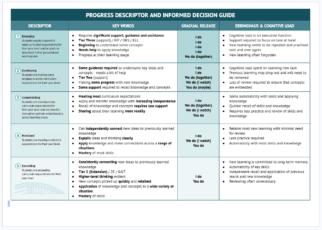
You can download this guide here –
Importantly, this is still a draft and not an official Ministry of Education framework or national reporting guide. It is Tawa School’s interpretation of the descriptors and an example of how one school is trying to make reporting more meaningful for both teachers and parents.
While still in draft form, I personally think this is an excellent piece of work. The key words and descriptors appear to reflect the actual student profiles within their classes and school, rather than simply applying generic labels.
What I particularly appreciate is that the guide goes beyond simply placing a child into a descriptor. It also helps show:
- levels of support,
- student independence,
- gradual release of responsibility,
- MTSS support levels (Tier 1, 2, and 3),
- and aspects of cognitive load, memory, retention, and automaticity through the lens of the science of learning and science of instruction.
I really like how the guide connects to the “I do, We do, You do” model to different learner profiles and support needs. Not every learner is ready for independence at the same pace, and I think this chart acknowledges that reality well.
I also think guides like this can help parents during meetings with schools by giving them a better understanding of what support may sit underneath a descriptor and helping them ask questions about what MTSS supports or scaffolds may already be in place for their child.
At the same time, I think this type of framework can also support teachers as they themselves learn and work through the new reporting systems and descriptors.
For many families, this type of explanation provides far more meaningful information than a single score or broad descriptor ever could.
My hope is that parents use this article as a guide to help better understand their child’s school report, the new descriptors, and the finer details that can often sit underneath broad labels.
The goal is not simply to focus on where a child sits within a descriptor, but to help parents educate themselves so they know:
- what questions to ask,
- what skills to look for,
- what supports or scaffolds may be needed,
- and what they may need to advocate for within school.
The more we understand about how children learn, cognitive load, support needs, and skill development, the better equipped we are to work alongside schools to support our children successfully.
Updated by Sharon Scurr on the 13 May 2026